

Why Beautiful Homes Still Fail in Reality

There’s something I’ve noticed more and more over the years.
A lot of homes today are designed to look impressive in photographs… but not necessarily to work properly in real life.
And I think that’s one of the biggest problems in residential design right now.
Because designing a home isn’t just about creating something that looks good on paper.
It’s about understanding how that building is actually going to come together on site.

How it sits in the landscape.
How materials weather over time.
How water moves around it.
How people will live in it day after day.
How builders interpret information.
And how hundreds of small decisions either create a calm, well-resolved home… or years of frustration and compromise.
I’ve seen both sides of that world.

Before I ever sat behind a desk producing drawings, I worked on site. I started out labouring, trained as a bricklayer, worked in construction, and later ran my own building company before moving into landscape design and eventually qualifying as a Chartered Architectural Technologist.
That background completely changed the way I approach design.
Because once you’ve physically built things yourself, you start to see buildings differently.
You realise very quickly that some designs look incredible in renders but become incredibly difficult, expensive, or compromised once construction begins.
You also realise that many of the biggest project problems happen long before work starts on site.
They happen during the thinking stage.
When key decisions haven’t been considered properly.
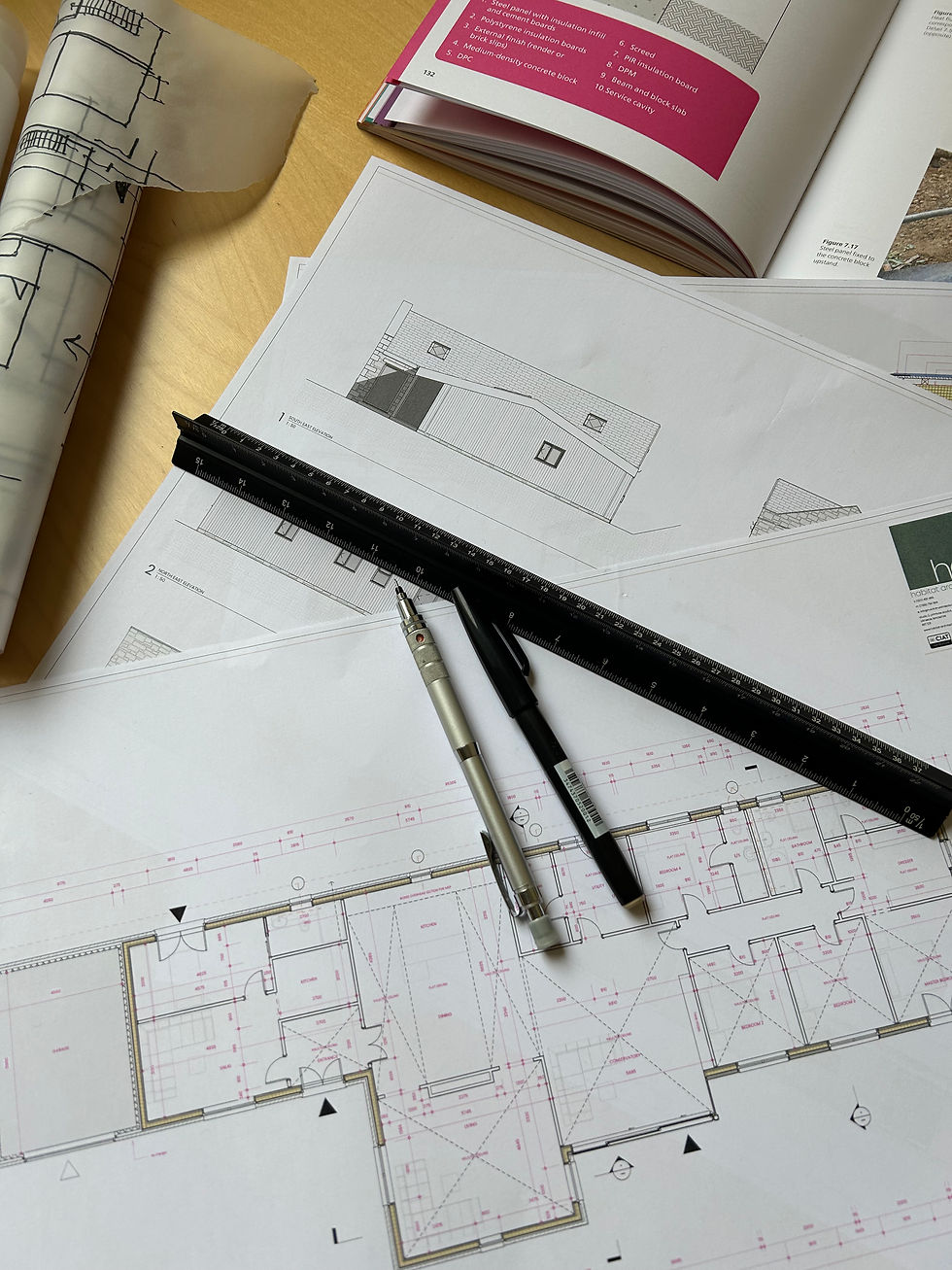
When architecture, landscape, drainage, levels, materials, construction methods and budget are all treated separately rather than as one connected process.
That’s why I’ve always believed good design should be both beautiful and buildable.
One without the other simply doesn’t work.
For me, the best homes are the ones that feel effortless.
Homes that sit naturally within their surroundings.
Homes that feel calm, timeless and properly thought through.
Homes where the architecture and landscape belong together rather than competing against one another.
Especially here in the North, where traditional stone buildings have such a strong connection to the landscape and local identity, getting those details right matters.

Not in a fake “heritage” way.
And not through copying old buildings exactly.
But by understanding proportion, materiality, depth, shadow, texture, and how buildings respond to the environment around them.
That understanding doesn’t come purely from studying architecture.
A lot of it comes from experience.
From seeing buildings being constructed.
From understanding how trades work.
From knowing where things typically go wrong.
From seeing what ages well and what doesn’t.
I think clients are becoming far more aware of this now too.
People don’t just want impressive visuals anymore.
They want confidence.
They want clarity.
They want someone who can guide them properly.
Someone who can help avoid costly mistakes.
Someone who understands both design and delivery.
Someone who thinks ahead.
Because the reality is, building or renovating a home is one of the biggest investments most people will ever make.

And good design isn’t just about appearance.
It’s about creating homes that work beautifully in reality for decades to come.
That’s ultimately what we try to do at Habitat Architecture.
Not just design homes that photograph well…
…but homes that genuinely work.


Comments